
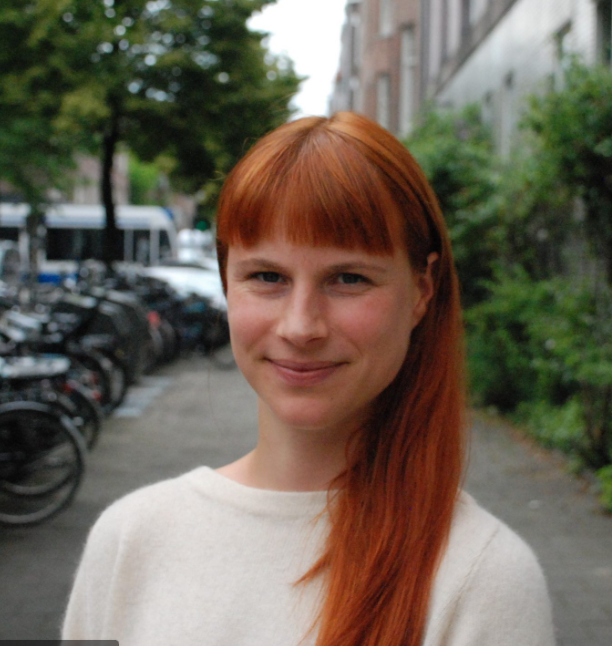
Ziega van den Berk (1987) is part of Team Landschape & Public Space in the School of Dogger Bank. She is a landscape architect and spatial designer. She studied interior architecture at Sint Lucas in Boxtel, Spatial Design at the Utrecht School of the Arts and landscape architecture at the Amsterdam Academy of Architecture. She graduated (cum laude) with her project: Doggerland the nursery for the North Sea, where she designed a wind farm for the Dogger Bank, a shallow ground, approaching the assignment from the existing landscape and marine life. With this project she was nominated for the Archiprix of 2021 and the NVTL talent award 2022. She has been working as a public space designer and landscape architect at MUST since 2013 and works on a wide range of assignments across all scale levels in both city, landscape and seascape. She is also a guest lecturer at the Academy of Architecture. Ziega has a broad interest in social and ecological forces and is unconditionally committed to making the living environment more livable for humans, animals and plants.
Maps never tell the whole truth; instead, they tell the story of the map maker.
RESEARCH PERSPECTIVE: NEW CONVENTIONS AND HABITS ON HOW TO DRAW THE SEA
The way we draw maps of the North Sea means that we ourselves become part of the human exploitation of the area. In our design-based study, we will be investigating the cartographic representation of the Dogger Bank and the North Sea as a whole. Maps never tell the whole truth; instead, they tell the story of the map maker. The traditional way in which we draw maps is the result of agreements, conventions and habits. The sea is reduced to a patch of blue. The Dogger Bank is shown as nothing more than a set of contour lines demarcated by an abstract geometric shape. With a little imagination, it could be said to look like a rabbit in a cage. The way we draw the sea is based on conventions that have their origins in navigation and exploitation. The purposes of the rewilding of the Dogger Bank are completely different. The community has now reached such a scale that it is time for new agreements, conventions and habits on how to draw the sea. Our design-based research will support that goal.
